
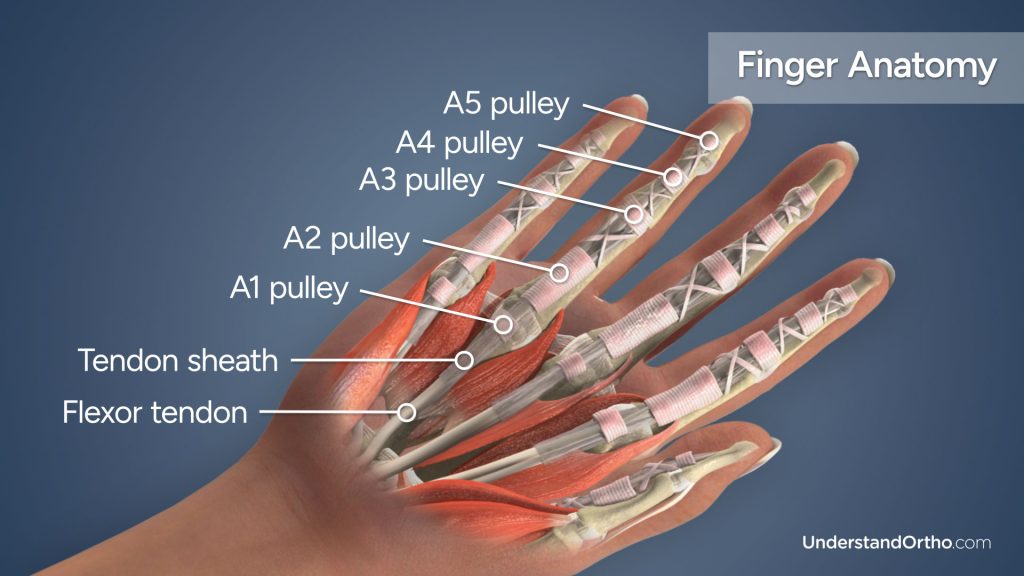
Unlocking Relief from Trigger Finger: Acupuncture for the A1 Pulley
Trigger finger (stenosing tenosynovitis) often occurs when the flexor tendon that bends your finger gets stuck at the A1 pulley—a fibrous tunnel in the palm—causing pain, clicking, locking, and difficulty moving the digit. It’s common among adults, affecting up to about 2–3% over their lifetime, and especially impacts daily hand function and grip strength Wikipedia.
What involves acupuncturing of the A1 Pulley?
Acupuncture involves inserting a fine, sterile needle into tender or dysfunctional tissue. In the case of trigger finger, the needle targets the A1 pulley or adjacent tendon nodule—not injecting any substance—potentially reducing thickness, improving tendon gliding, and activating pain-relief mechanisms.
What the Research Shows
1. Randomized Controlled Trial: A Single Needling Session
A well-designed randomized trial of 58 participants evaluated the effects of just one needling session to the A1 pulley compared to no treatment. Results one week later demonstrated significant improvements in:
Tendon-pulley thickness
Pain levels
Hand function (by DASH questionnaire)
Pinch grip strength
These gains were significantly better than in untreated controls J-STAGE.
2. Single Case Study: Two Weeks of Needling Plus A1 Pulley Stretching
In one detailed case of a 75-year-old patient with chronic trigger finger, a combined protocol—including ultrasound, tendon-gliding exercises, A1 pulley stretching, and dry-needling—produced dramatic improvements:
Pain score (Nottingham Scale) dropped from 6 to 0
Activity limitation (PRWE) improved from 67.5% down to just 10.5% ResearchGateSpringerOpen
3. Extended Program: Five Weeks of Needling with Physiotherapy
Another study involved a 5-week physiotherapy program with splinting, ultrasound, and repeated needling at the A1 pulley nodular area. The intervention group showed:
75% reduction in pain
100% improvement in quality of life
95% gain in hand grip strength
This was significantly more than through physiotherapy alone SpringerOpen.
How It Might Work
Mechanical impact: Needle insertion may physically reduce thickening of the A1 pulley and tendon, improving gliding.
Neuromodulatory effects: Dry needling may activate the body’s natural pain-relief systems—both local and central nervous pathways.
Synergy with movement: Combining needling with stretching or tendon gliding can enhance functional recovery.
What to Expect from Treatment
Assessment first: Your therapist examines your finger—identifying the A1 pulley nodule and ruling out red flags or contraindications.
Informed consent: You’ll be briefed on the technique, benefits, and possible minor side effects like temporary soreness or bruising.
Treatment session: Using a sterile technique, the needle is inserted into the A1 pulley area using appropriate angles, typically just once per session.
Follow-up: Outcome measures (pain, grip strength, function) are assessed over time to determine next steps—whether that’s repeating the treatment, adding exercises, or exploring other therapies.
Summary Table
| Evidence Source | Treatment Type | Key Outcomes |
|---|---|---|
| Randomized trial (58 pts) | One session dry-needling over A1 pulley | ↓Pain, ↓pulley thickness, ↑pinch grip, improved function |
| Case study (1 patient) | 2 weeks needling + stretching & physio | Pain: 6 → 0; Function limitation: 67.5% → 10.5% |
| 5-week program (20 pts) | Repeated needling + splinting & ultrasound | 75% pain ↓, 100% QoL ↑, 95% grip strength ↑ compared to control |
Final Thoughts
Acupuncturing the A1 pulley shows promise for both short-term symptom relief and functional improvement in trigger finger, especially when combined with movement-based therapy. The strongest support comes from a randomized trial, with additional encouraging evidence from case reports and small controlled studies.
If trigger finger is impacting your day-to-day life, a single, gentle needling session, delivered by a trained practitioner as part of a broader rehab plan, might be worth exploring. It’s minimally invasive, carries low risk, and targets the root pulley problem directly.
References & Live Links
Azizian, M., Bagheri, H., Olyaei, G., et al. (2019). Effects of dry needling on tendon-pulley architecture, pain and hand function in patients with trigger finger: A randomized controlled trial study. Journal of Physical Therapy Science, 31, 295–298. Full text: [J-Stage PDF] J-STAGE
Mahapatra, S., et al. (2023). A Comprehensive Approach to Chronic Trigger Finger: A1 Pulley Stretching and Dry Needling. Novel Research Aspects in Medicine and Medical Science, 9, 102–114. DOI link via publisher stm.bookpi.orgSpringerOpen
El-Halawany, et al. (2024). Dry needling and physiotherapy for trigger finger: effects on pain, function, and grip. Bulletin Faculty of Physical Therapy. PDF via SpringerOpen SpringerOpen