
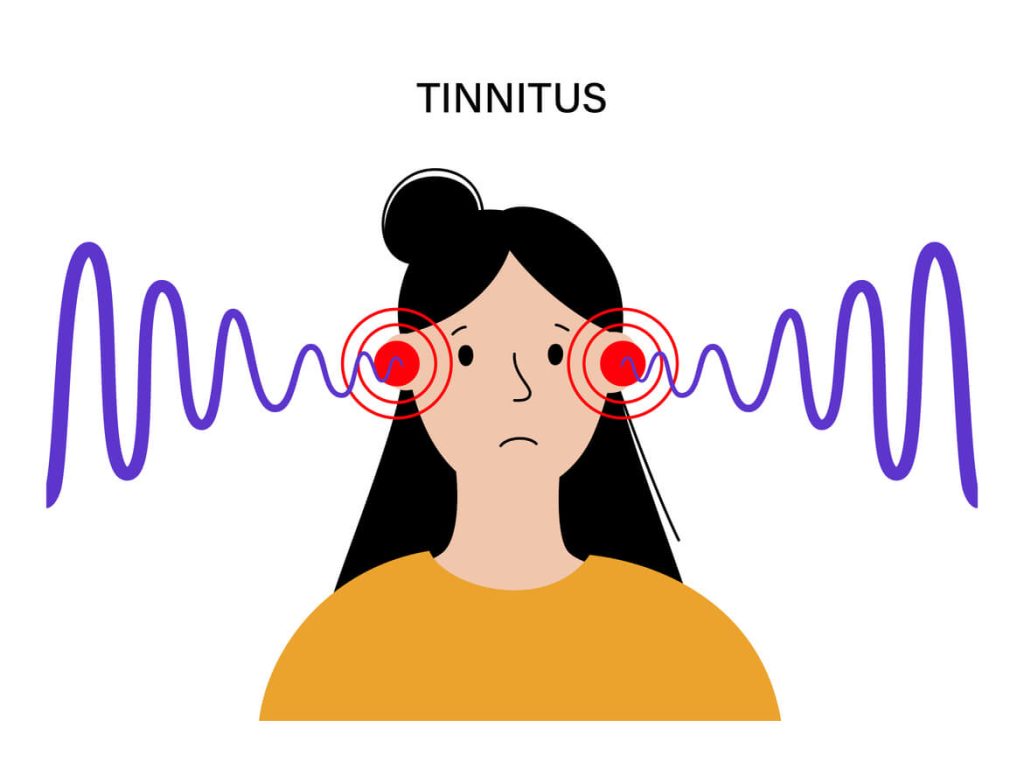
Tinnitus & Acupuncture: What the Research Says (and what to expect )
If you live with that constant ringing, buzzing, or whooshing in your ears, you’re not imagining it—tinnitus is real, and it can seriously affect sleep, focus, and mood. While there’s no single “cure,” many people find relief with a plan that calms the nervous system, supports blood flow to the inner ear, and reduces the stress feedback loop. That’s exactly where acupuncture can help.
How acupuncture may help tinnitus
Modern research suggests acupuncture can modulate neural activity involved in sound perception and attention, influence neurotransmitters (like GABA and 5-HT), and improve regional blood flow—all of which may reduce tinnitus perception and distress (Xu et al., 2022). A common traditional point selection around the ear (e.g., SJ17, SI19, GB2) with points that settle the nervous system and address your broader health picture.
What the evidence shows (in plain English)
Systematic reviews/meta-analyses:
A 2021 meta-analysis of randomized trials found that acupuncture was more effective than sham/placebo for improving tinnitus severity/loudness on validated scales—while noting that trial quality varied and more rigorous research is needed (Huang et al., 2021).
A 2023 network meta-analysis comparing several acupuncture methods reported that acupuncture—particularly protocols combining body and peri-auricular points—outperformed control conditions on clinical response and Tinnitus Handicap measures, though heterogeneity remains (Ji et al., 2023).
An overview of systematic reviews in Frontiers in Neurology concluded that acupuncture shows promising benefits for tinnitus, but stressed the need for higher-quality, larger RCTs (Xu et al., 2022).
Randomized controlled trials (highlights):
In a single-blind RCT using brain imaging (SPECT), active acupuncture—versus placebo—produced significant tinnitus improvement and measurable changes in auditory-related brain perfusion (Laureano et al., 2016).
A double-blind Iranian RCT (n=88) found greater reductions in tinnitus loudness and severity scores after a 15-session acupuncture course compared with sham, with benefits persisting at short follow-up (Naderinabi et al., 2018).
Bottom line: Evidence leans positive—especially for symptom relief—while researchers continue to call for larger, well-controlled trials (Huang et al., 2021; Ji et al., 2023; Xu et al., 2022). We’re candid about both the promise and the limitations so you can make an informed choice.
What treatment looks like at Center of Health
Personalised plan: We assess onset, triggers, noise exposure, stress, sleep, neck/jaw tension, and co-existing hearing issues to tailor your points and adjunct therapies.
Course of care: Most clients start with 6–10 sessions over 3–5 weeks, then taper based on response. Many notice changes in loudness/annoyance, sleep, or “reactivity” first; others benefit gradually across a full course (Huang et al., 2021; Naderinabi et al., 2018).
Integrative support: We often combine acupuncture with sound therapy strategies, breathing work, gentle neck/jaw care, and lifestyle tweaks that reduce the stress-tinnitus cycle (Xu et al., 2022).
Is acupuncture right for you?
Good candidates: non-pulsatile tinnitus, stress-related flares, co-existing neck/jaw tension, or noise-exposure history.
Important: If your tinnitus is pulsatile (beats with your pulse), sudden, or accompanied by new hearing loss, dizziness, neurological symptoms, or ear pain/infection—see your GP/ENT promptly to rule out urgent causes.
Safety: Acupuncture is generally well-tolerated when performed by qualified practitioners; minor bruising or temporary soreness can occur rarely (Xu et al., 2022).
Ready to try?
If you’re curious whether acupuncture could turn the volume down on your tinnitus, book a comprehensive consult at Center of Health. We’ll map out a practical plan, start treatment, and track your progress with the same validated measures used in research.
Xu et al., 2022 – Overview of systematic reviews. Frontiers in Neurology, 13, 1061431. https://doi.org/10.3389/fneur.2022.1061431
Huang et al., 2021 – Systematic review & meta-analysis. Acupuncture in Medicine, 39(4), 264–271. https://pubmed.ncbi.nlm.nih.gov/32772848/ (Article DOI: 10.1177/0964528420938380)
Ji et al., 2023 – Network meta-analysis. Medicine (Baltimore), 102(39), e35019. https://pubmed.ncbi.nlm.nih.gov/37773876/
Laureano et al., 2016 – RCT with brain SPECT. European Radiology, 26(12), 4204–4210. https://doi.org/10.1007/s00330-015-4164-7
Naderinabi et al., 2018 – Double-blind RCT (n=88). Caspian Journal of Internal Medicine, 9(1), 38–45. https://doi.org/10.22088/cjim.9.1.38 (free PDF available)