
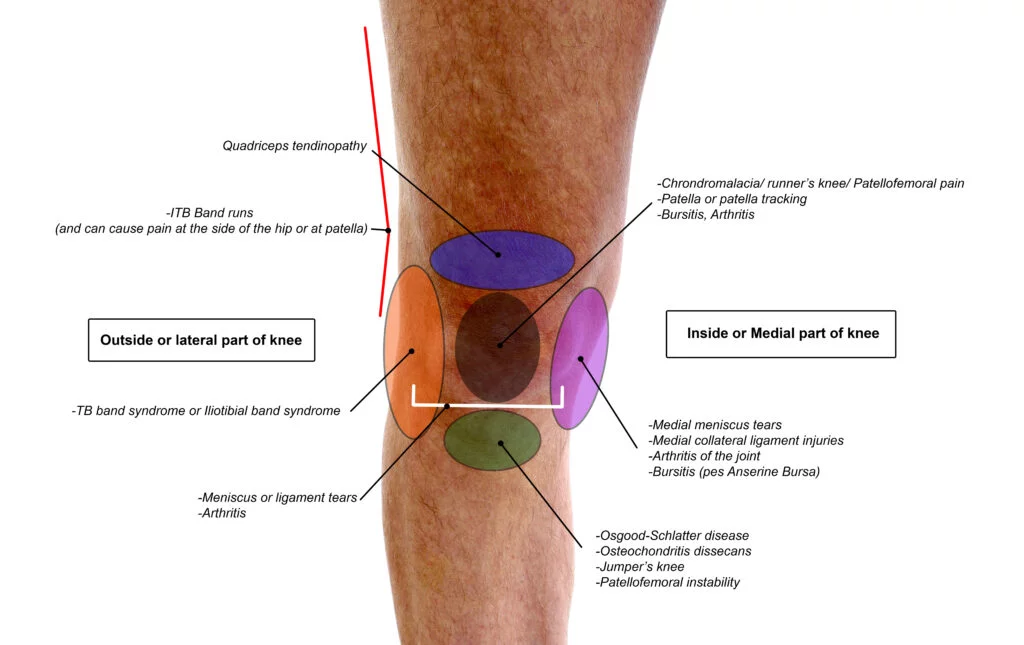
Understanding Knee Pain and How Acupuncture Can Help
Knee pain is one of the most common issues we see in clinic. Whether it’s a dull ache when climbing stairs, stiffness in the morning, or sharp pain after activity, it can affect how you move and live your day.
At our clinic, we combine acupuncture, Chinese herbal medicine, and physiotherapy to relieve pain, improve joint mobility, and support natural healing, helping you stay active and comfortable for longer.
Common Types of Knee Pain
1. Osteoarthritis (OA)
The most common type of knee pain caused by gradual “wear and tear” of the joint cartilage. It leads to stiffness, swelling, and aching that worsens with activity.
2. Rheumatoid Arthritis (RA)
An autoimmune condition where inflammation affects the joint lining, leading to swelling, heat, and stiffness, especially in the mornings.
3. Overuse or Sports Injuries
Repetitive strain, poor alignment, or muscle imbalance can cause tendon or meniscus irritation, leading to pain during movement or sport.
4. Post-Surgical or Regenerative Recovery
After injury or treatments like PRP or stem cell therapy, acupuncture can help reduce inflammation, ease swelling, and promote tissue repair.
How Acupuncture Helps Knee Pain
Acupuncture has been shown to be an effective, evidence-based therapy for managing chronic knee pain, especially osteoarthritis.
A 2021 meta-analysis in BMJ Open found that acupuncture significantly improved knee osteoarthritis pain and function compared with usual care or sham treatment.
A Cochrane Review (2018) concluded that acupuncture provided short-term pain relief and improved physical function for people with knee OA.
Studies also show that acupuncture reduces inflammation by influencing cytokine activity and increases local blood flow to aid joint repair.
In clinic, we use points such as ST35, SP9, GB34, ST36, and local trigger points to target inflammation and stiffness, often combined with electroacupuncture for added effect.
Herbal Support for Joint Health
Chinese herbal medicine complements acupuncture by addressing the internal causes of joint pain inflammation, fluid retention (dampness), and weakness of the bones and sinews.
Several formulas have been studied for arthritis-related knee pain:
Du Huo Ji Sheng Tang: Shown to reduce pain and stiffness in knee osteoarthritis, comparable in effect to NSAIDs but with fewer side effects (Journal of Ethnopharmacology, 2013).
Juan Bi Tang: Used for “damp obstruction” type joint pain, supported by studies showing anti-inflammatory and analgesic effects in arthritis models.
Yi Yi Ren (Coix seed) and Niu Xi (Achyranthes) are often added to formulas to promote circulation and joint repair.
These formulas are tailored individually to match the person’s presentation not just the symptom.
A Holistic, Integrative Approach
In Traditional Chinese Medicine (TCM), knee pain is often seen as Bi Syndrome meaning blockage of Qi and Blood in the meridians. Treatment focuses on clearing inflammation, improving circulation, and strengthening the body’s foundation for long-term joint support.
When combined with physiotherapy and strength training, acupuncture and herbal medicine can enhance healing, improve movement, and reduce recurrence.
In Summary
Whether your knee pain comes from osteoarthritis, autoimmune inflammation, overuse, or recovery after injury, acupuncture and Chinese medicine offer research-backed, natural options for relief.
By reducing inflammation, easing pain, and supporting regeneration, they can help you move with greater comfort and confidence naturally and holistically.
Keywords: acupuncture for knee pain, osteoarthritis acupuncture, Chinese herbs for arthritis, natural knee pain relief, holistic joint health
Meta description: Learn how acupuncture and Chinese herbal medicine can relieve knee pain from osteoarthritis, injury, or arthritis. Research-backed, natural treatment to reduce inflammation and improve mobility.
Would you like me to make a short Instagram post version from this next (e.g. “How Acupuncture Helps Knee Pain Backed by Research” with a 5-slide carousel)?